In the rolling hills of Ntahbang, a small Indigenous Mbororo Fulani community in Bamenda, Cameroon, something extraordinary is taking root. Where hardship, displacement, shrinking grazing lands, polluted water sources, and the confiscation of Indigenous lands for so-called development projects once defined daily life alongside hunger, malnutrition, and declining soil fertility, the Mbororo women of Ntahbang are now cultivating hope. Through their commitment to building a healthy and sustainable food system, they are working to secure food sovereignty for their community.
One early Thursday morning in Ntahbang, the sun has barely risen when Gaaji, a Mbororo woman in her mid-30s, ties her baby to her back and begins the two-hour journey on foot to the nearest market. When she arrives, she scans the stalls piled with tomatoes, cabbage, beans, and huckleberry greens, but the prices make her hesitate. Fresh fruit and vegetables are too expensive, and most of the produce comes from distant farms sprayed with chemicals she can’t pronounce. She turns instead to what she can afford: maize flour, rice, and a few handfuls of potatoes.
Back home, Gaaji’s family’s diet is simple and heavy in starch. Protein is scarce. As Indigenous pastoralists, the Mbororo once relied on cattle for milk, butter, meat, and income, but now the herds are smaller, the grasslands are overrun by invasive species, and the streams that once fed their livestock run brown with pollution. Shrinking grazing land and erratic rainfall have reduced both the quality and quantity of milk and meat, leaving families with less to eat and less to sell.
For Indigenous women like Gaaji, health and sustainability mean being able to feed their children fresh food grown without chemicals, harvested from clean soil, and shared within the community. But in a system that makes healthy food costly and distant, choice itself becomes a privilege.
In this reality, the Indigenous women of Ntahbang decided that change could no longer wait. Coming together as the Anura Ntahbang Women Common Initiative Group, they set out to rebuild their food system from the ground up, rooted in food sovereignty, collective labor, and ancestral agroecological knowledge. Instead of walking miles to buy food, they now grow it themselves, nourished by organic compost and rainwater.
Returning to the Land
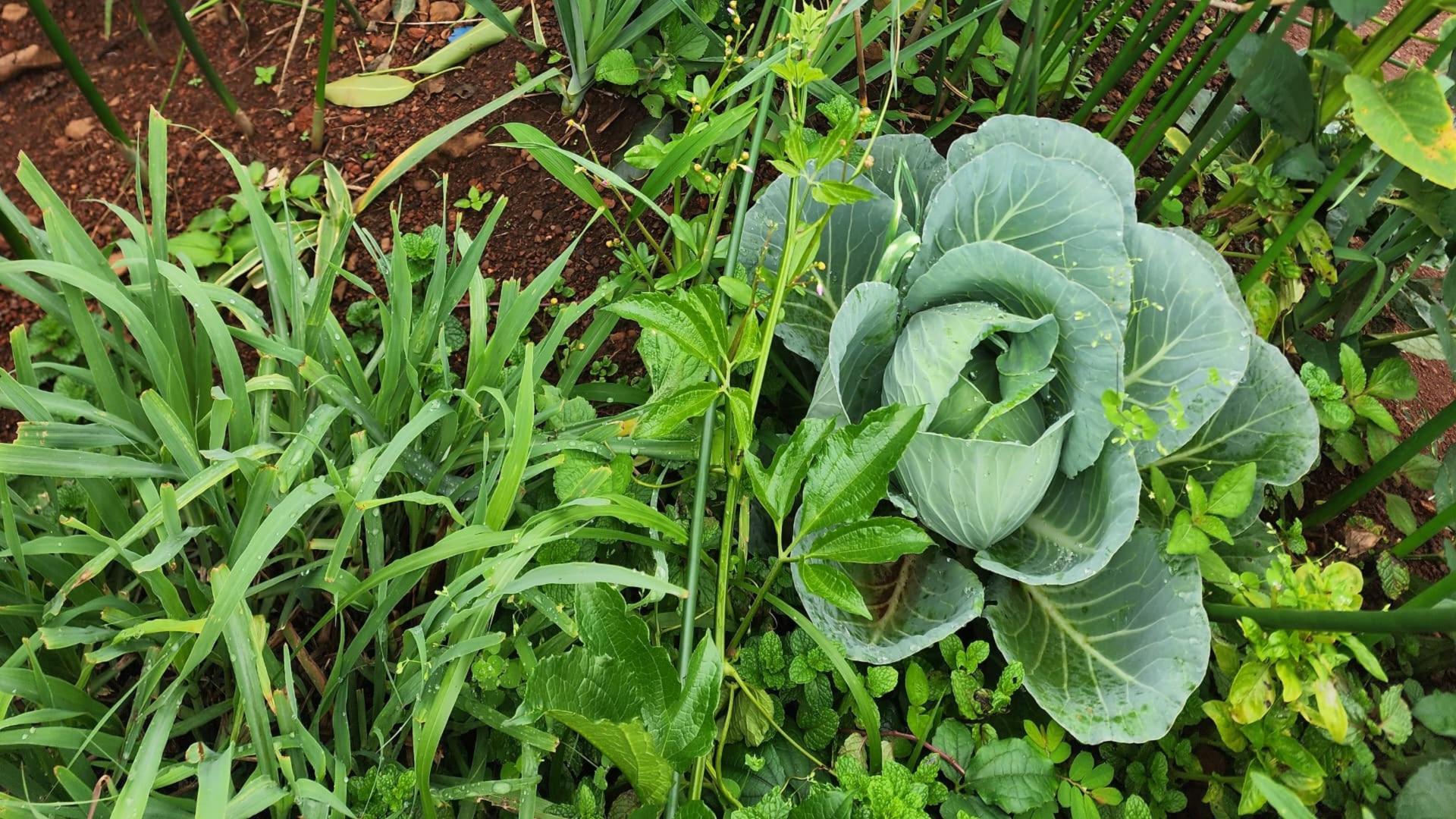
Through hands-on training, the women have learned crop diversification, conservation tillage, organic manure production, and biological pest control. They discuss the harms of chemical fertilizers and share memories of how their grandmothers once cultivated fertile soil using animal waste and compost. The connection between past and present becomes tangible with every technique, a return to the Traditional Ecological Knowledge and wisdom embedded in Mbororo lifeways.
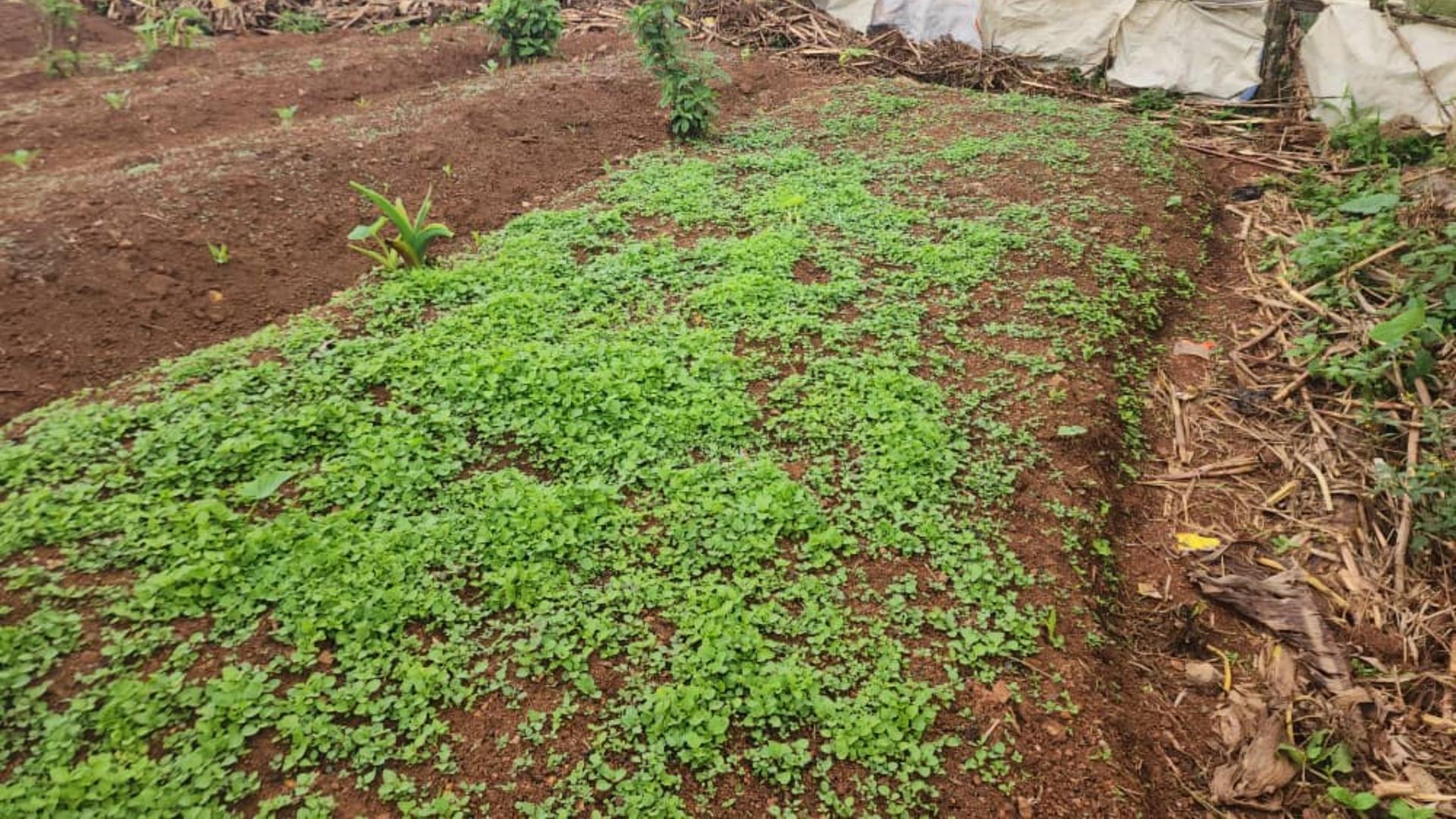
With support from The Agroecology Fund, 60 women received vegetable seedlings for karkashi, njama njama (huckleberry), tomatoes, and cabbage, as well as seedlings for guava, avocado, and mango trees. The project also distributed organic poultry to provide families with eggs and manure—and an additional source of income. Weekly group meetings became spaces for women to share successes, resolve challenges, and advocate for agroecology as both a livelihood and a form of Indigenous resistance.
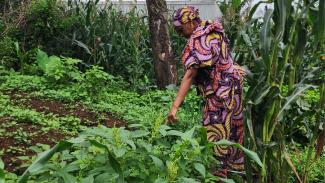
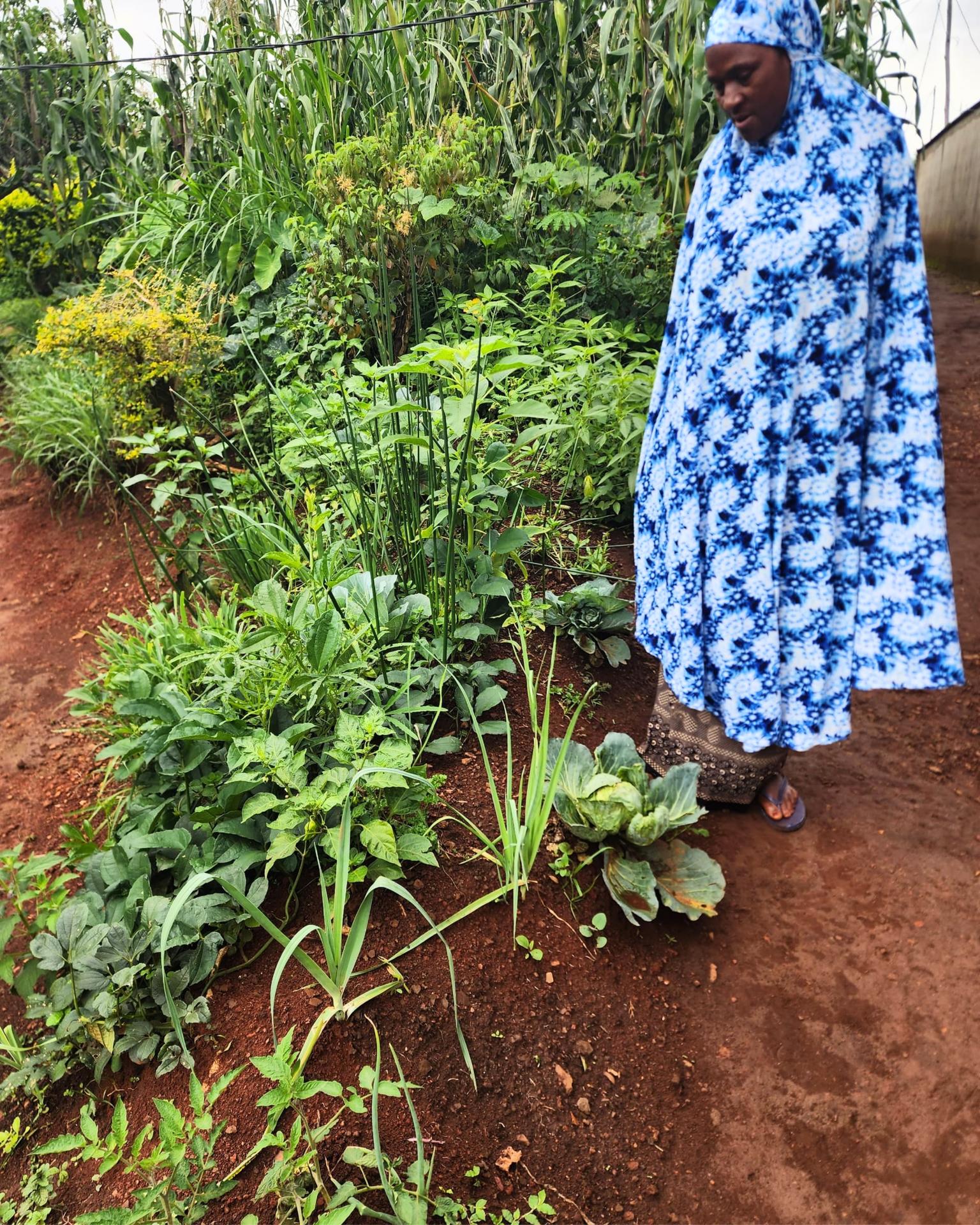
“Before, we depended on food from the market,” says Hadijah Dawa, a Mbororo mother of four who turned her small plot into a thriving huckleberry farm. “Now, I can feed my family healthy meals and still sell what remains. Agroecology has given me freedom and hope for my children.” Dawa’s story mirrors that of many women in Ntahbang. From her modest garden, she has become a local peer educator, guiding other women to grow vegetables without relying on chemicals. “When we use the soil the right way, it gives back to us,” she says.
Seeds of Change
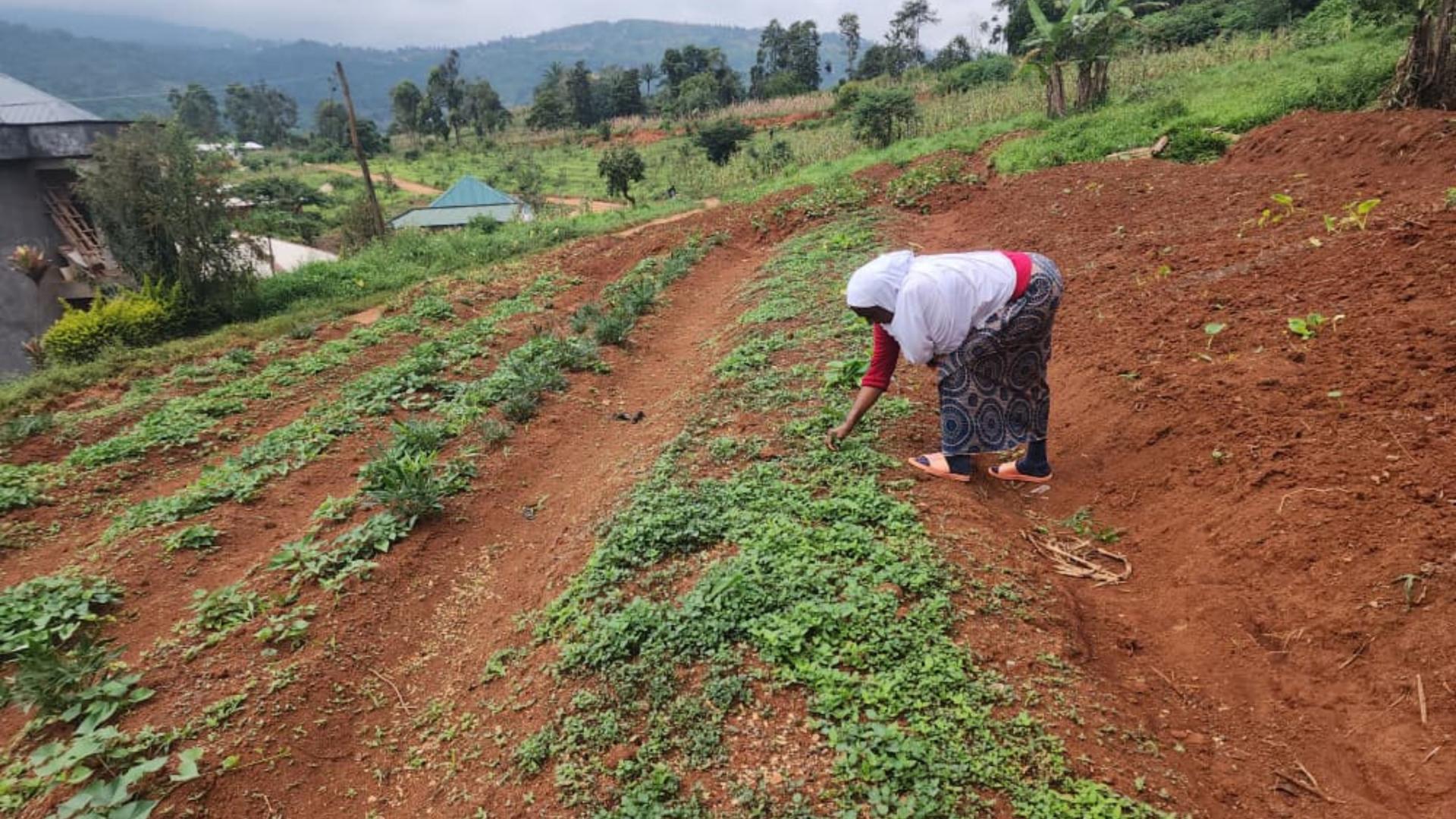
As their gardens began to flourish with green vegetables, herbs, and fruit trees, for the women, these were not just plants: they were symbols of continuity. “These are fruit trees I will eat from, my children will eat from, and my grandchildren will continue to eat from,” says Mairam, one of the first women to plant guava and mango seedlings in her compound. “Every tree is a promise that we are leaving something good behind.”
Mairam’s trees are a metaphor for her family’s resilience. She and her neighbors have begun exchanging seedlings, reviving a culture of reciprocity and redistribution that once characterized Mbororo communal life. “When someone plants a tree, she does not plant for herself alone. It is for the next generation,” she says.
The project also brought social transformation. Weekly women’s gatherings evolved into spaces for dialogue and solidarity. Women learned bookkeeping, cooperative management, and advocacy for land rights and organic farming. These meetings reawakened kinship network ties of sisterhood that had been weakened by years of conflict and economic stress.
Despite the sociopolitical instability affecting the region, the women have continued their work with unwavering resolve. “Even when we could not meet in large groups, the women shared updates through small gatherings and phone calls. Agroecology became our connection,” says one of the project coordinators.
Youth and Intergenerational Learning
Recognizing that true sustainability lies in intergenerational continuity, the Anura Ntahbang Women Common Initiative Group intentionally included young people in the project. Among them was Habiba, a 23-year-old agricultural student. “At first, I only knew agroecology from school. Here, I learned to make organic compost, to care for crops with respect, and to see farming as part of who we are,” she says.
Habiba now manages her own small vegetable plot using seeds and seedlings provided through the project. She mentors younger girls in her community, teaching them that agriculture can be both a livelihood and a cultural practice rooted in care for the land. Her story demonstrates how Indigenous youth are reshaping their relationship to farming and have now reclaimed it as a path to sovereignty and pride. “The soil is our heritage,” she says. “When we take care of it, we take care of ourselves.”
Along with their successes, the women also faced setbacks. Heavy rains destroyed vegetable beds, and poultry were lost due to disease outbreaks. Rising insecurity in the region also limited mobility and communication among farmers. Yet, the women’s determination did not waver. Through cooperation and shared responsibility, they developed adaptive strategies, replanting quickly after losses, sharing seeds among households, and documenting lessons learned. They now keep a collective nursery to ensure constant access to seedlings, a practice inspired by ancestral models of resource sharing. “This project has helped us so much,” says Maimuna Buba, a participant who started her own organic chicken unit. “Even when we lose crops, we start again. We have learned that we can always try and that we are not alone.”
Indigenous-Led Systems for a Sustainable Future
For the Mbororo Fulani women of Ntahbang, agroecology is not simply a technical innovation. It is a cultural practice reconnecting them to Indigenous lifeways of reciprocity, responsibility, and connection with the land, an antidote to extractive agricultural systems that have eroded both soil and community bonds.
The project’s achievements go beyond harvest yields. Women have gained confidence, social recognition, and economic independence. They have emerged as advocates for food sovereignty, teaching others to farm with respect for the earth. Their gardens are living classrooms where traditional songs, prayers, and ecological wisdom are shared across generations once again.
Agroecology, as practiced here, reflects the Mbororo understanding of life as interdependence between people, animals, and the natural environment. By embracing organic farming and community-based leadership, the women have revived traditional methods that were once disrupted by modern agricultural practices.
As the community looks ahead, the women plan to expand their indigenous seed distribution network, engage schools in organic gardening, and continue advocating for land access for Indigenous women. Their message is clear: food sovereignty is not a dream, it is a practice rooted in Indigenous knowledge and sustained by collective action. “When we nurture the soil, we nurture people,” another of the project leaders says. “And when people are given tools and trust, they rise to build stronger, greener communities.”
Zuhira Musa (FULANI) is a CS Intern.
Top photo: Hadijah Dawa in her vegetable and maize garden in Ntahbang, established through Anura’s Agroecology Project. Her story embodies Indigenous women’s leadership in rebuilding food sovereignty and restoring soil health through organic farming practices.
All photos by Albaou Amira, Anura Ntahbang women (Fulani).